



 ไทย
ไทย
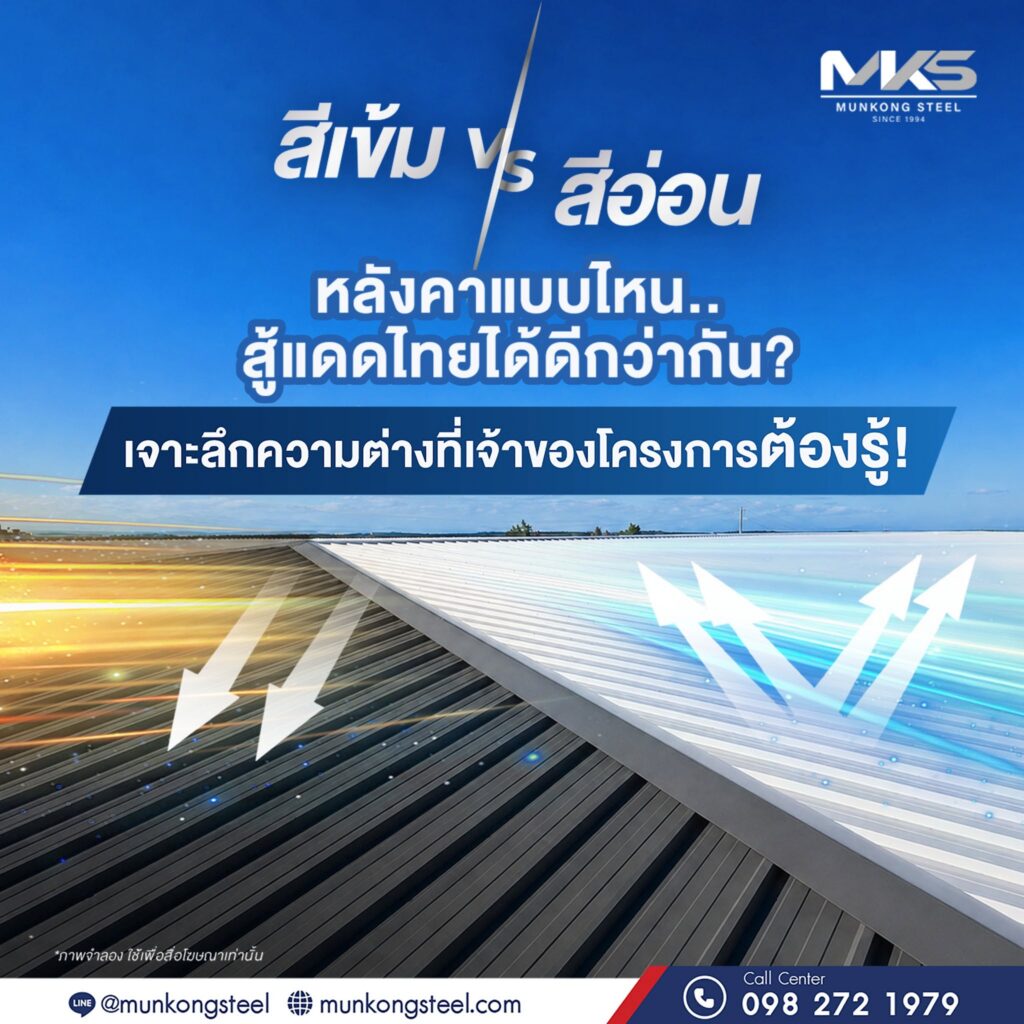
In hot climates like Thailand, choosing a Factory Roof Color is not only about building appearance. Roof color can also affect how much solar energy the roof reflects or absorbs, which can influence roof surface temperature and heat transfer into the building.
So, when choosing a metal roof for a factory or warehouse, which performs better in hot weather: a light-colored roof or a dark-colored roof?
Light-Colored Roofs: Better Solar Reflectance
Light-colored roofs, such as white, light gray, and cream, generally have higher Solar Reflectance than darker colors.
This means the roof surface can reflect a greater portion of incoming solar energy instead of absorbing it as heat.
With less solar energy absorbed by the roof, surface temperatures can be lower, helping reduce the amount of heat transferred into the building.
For air-conditioned or temperature-controlled facilities, reducing heat gain through the roof can also help lower the cooling load and improve overall energy efficiency.
Light-colored roofing is therefore particularly suitable for food processing facilities, cold storage warehouses, temperature-controlled buildings, and factories where indoor temperature management is important.
Dark-Colored Roofs: Modern Design with Greater Insulation Requirements
Dark-colored roofs, such as black, dark blue, and dark brown, generally absorb more solar energy than lighter-colored surfaces.
As a result, the roof surface can reach higher temperatures when exposed to direct sunlight.
Without effective thermal insulation, more heat may be transferred into the building, increasing indoor temperatures and placing additional demand on air-conditioning or cooling systems.
However, dark-colored metal roofing remains a popular choice for modern, contemporary, and industrial-style buildings.
When a dark roof is preferred for architectural or branding purposes, combining it with high-performance thermal insulation such as PU or PIR can help reduce heat transfer into the building.
Choosing a Factory Roof Color Requires More Than Just Color
Although roof color can influence solar heat gain, the overall thermal performance of a roofing system depends on more than color alone.
Other important factors include Solar Reflectance, coating properties, insulation type and thickness, roof construction, ventilation, building design, and operating conditions.
For factories and warehouses where reducing heat gain is a priority, a light-colored roof can help reflect more solar energy. If a dark-colored roof is preferred for design purposes, selecting an appropriate insulation system can help improve the roof’s overall thermal performance.
Munkong Steel (MKS) provides professional consultation to help customers select the appropriate roof color, metal roofing specifications, and PU/PIR insulation systems for different factory and industrial building requirements.
Munkong Steel (MKS) — Strong from Start to Finish