



 ไทย
ไทย
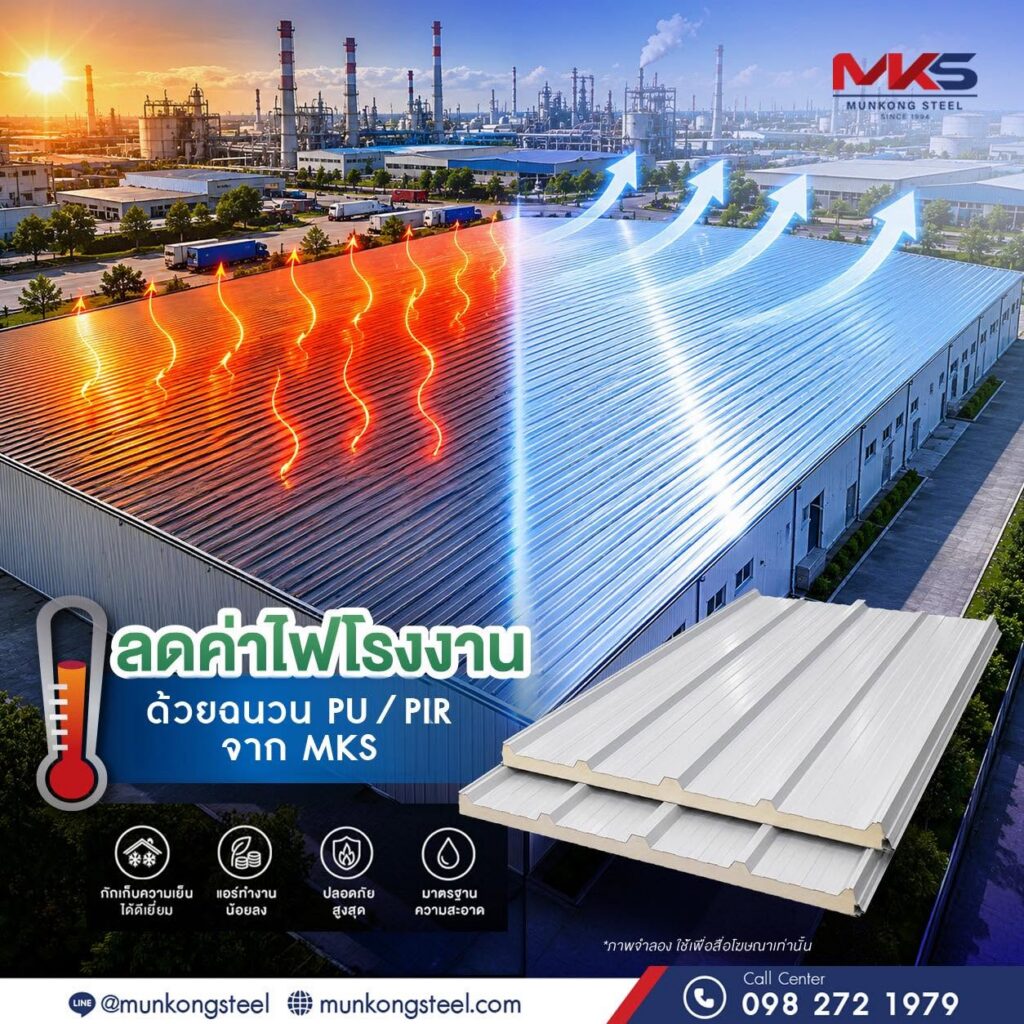
Rising electricity costs in factories are not always caused by air-conditioning or cooling systems alone. Heat entering the building through the roof can also increase the cooling load and force these systems to work harder to maintain the required indoor temperature.
PU PIR Insulated Roofing from MKS is an effective solution for factories looking to improve thermal performance, maintain more stable indoor temperatures, and reduce the workload of cooling systems over the long term.
1. PU PIR Insulated Roofing Helps Reduce Heat Transfer
PU and PIR insulation provide effective thermal resistance, helping reduce heat transfer from outside through the roof and into the building.
When the appropriate insulation thickness and specifications are selected, the roofing system can achieve a higher R-Value and improve overall thermal performance.
This helps maintain more stable indoor temperatures, particularly in factories and buildings that operate cooling systems for extended periods.
2. Reduces the Workload of Air-Conditioning and Cooling Systems
When less external heat enters the building, air-conditioning and cooling systems require less energy to maintain the desired indoor temperature.
PU PIR Insulated Roofing can therefore help reduce cooling demand, energy consumption, and operating costs.
Actual energy savings will depend on several factors, including building conditions, insulation thickness, roof area, cooling system efficiency, operating hours, and the required indoor temperature.
3. PIR Provides Enhanced Fire Performance
PIR insulation generally provides better flame-spread performance than conventional PU insulation.
When exposed to high temperatures, PIR can form a protective char layer that helps slow the spread of flames.
For factories where fire safety is an important consideration, roofing products and systems should be selected according to the relevant testing standards and specific requirements of each building.
4. Suitable for Temperature-Controlled and Hygienic Industries
PU PIR Insulated Roofing can be used across a wide range of industrial applications, particularly buildings where temperature control is important, such as food processing facilities, pharmaceutical facilities, warehouses, and cold storage facilities.
Properly designed joints and professional installation can also help minimize air leakage and moisture infiltration, both of which are important considerations for temperature-controlled environments.
How Can PU PIR Insulated Roofing Help Reduce Factory Energy Costs?
The key is not simply making the building “cooler.” It is reducing the amount of external heat entering the building in the first place.
When the roofing system provides effective thermal insulation, air-conditioning and cooling equipment can operate with a lower cooling load. This can help reduce energy consumption and long-term operating costs.
Investing in PU PIR Insulated Roofing should therefore be considered not only in terms of initial installation costs but also in relation to energy consumption and operating expenses throughout the building’s service life.
Munkong Steel (MKS) provides professional consultation to help select PU/PIR insulated roofing systems based on building type, operating conditions, and individual project requirements.
Munkong Steel (MKS) — Strong from Start to Finish