



 ไทย
ไทย
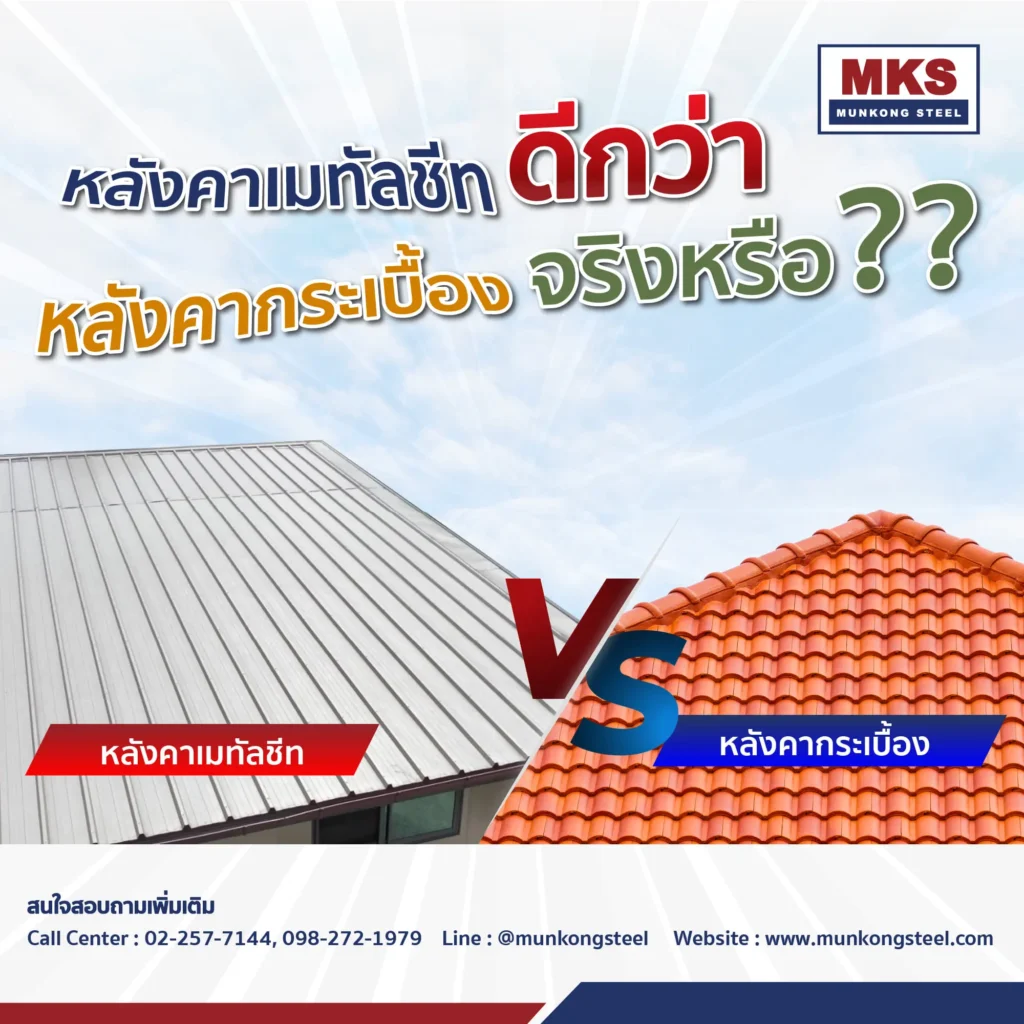
When choosing roofing materials, many people wonder which option is best for their building. Two of the most popular choices are Metal Sheet Roofing and traditional roof tiles, each offering different advantages and limitations.
Today, MKS compares Metal Sheet Roofing vs. Roof Tiles to help you understand their key differences and determine which roofing material is more suitable for your building.
Is Metal Sheet Roofing really better than roof tiles? Let’s take a closer look.
1. Metal Sheet Roofing Offers More Designs, Profiles, and Colors
One of the key advantages of Metal Sheet Roofing is the wide variety of profiles, designs, and colors available, making it easier to match different architectural styles.
Metal roofing sheets can also be curved for specific building designs and manufactured according to the required roof length. This allows large roof areas to be covered with fewer joints between panels.
2. Metal Sheet Roofing Is Lighter Than Roof Tiles
Another major advantage of Metal Sheet Roofing is its significantly lighter weight compared with traditional roof tiles.
The lighter the roofing material, the lower the load placed on the building structure. This can help reduce structural requirements and potentially lower construction costs.
For large buildings, factories, warehouses, and industrial facilities, the weight of roofing materials can therefore be an important consideration.
3. Metal Sheet Roofing Is Faster and Easier to Install
Metal Sheet Roofing is generally easier and faster to install than traditional roof tiles.
Because metal roofing sheets can be manufactured in long lengths according to the building structure, fewer individual pieces and joints are required during installation.
This helps simplify the installation process, reduce the time required for joining roofing sheets, and shorten the overall roofing installation period.
4. Metal Sheet Roofing Helps Reduce the Risk of Water Leakage
Because Metal Sheet Roofing can be manufactured in long sheets to suit the dimensions of the building, fewer joints are required across the roof.
Fewer joints mean fewer potential areas where water leakage may occur.
Properly designed and installed Metal Sheet Roofing can therefore help reduce the risk of leakage, particularly for large roof areas.
5. Heat and Sound Insulation for Metal Sheet Roofing
When comparing roofing materials without insulation, traditional roof tiles generally provide better heat and sound absorption than standard metal roofing sheets.
However, modern insulation technologies such as PU and PIR insulation can be combined with Metal Sheet Roofing to improve thermal performance and help reduce external noise.
Certain insulation systems can also provide improved fire performance, helping overcome some of the traditional limitations associated with standard metal roofing.
Metal Sheet Roofing vs. Roof Tiles: Which Should You Choose?
Metal Sheet Roofing offers several advantages, including lightweight construction, fast installation, a wide range of profiles and colors, customizable sheet lengths, and fewer joints that may help reduce the risk of water leakage.
However, both Metal Sheet Roofing and traditional roof tiles have their own advantages and limitations. Therefore, it is not possible to say that one roofing material is 100% better than the other in every situation.
The right roofing material should be selected based on the building design, intended application, budget, structural requirements, and specific needs of each project.
If you would like to learn more about Metal Sheet Roofing or need professional advice on choosing the right roofing materials for your building, contact MKS (Munkong Steel). Our team is ready to help you select the most suitable solution for your project.